What Does the New U.S.–India Trade Deal Really Mean for Businesses?

Source: shutterstock
The United States and India have officially announced a new trade understanding aimed at easing tariff tensions and boosting bilateral commerce. The announcement followed direct communication between U.S. President Donald Trump and Indian Prime Minister Narendra Modi. the agreement includes tariff reductions and reciprocal trade commitments, marking a significant step forward after months of negotiations and uncertainty.
What Exactly Has Been Announced So Far?
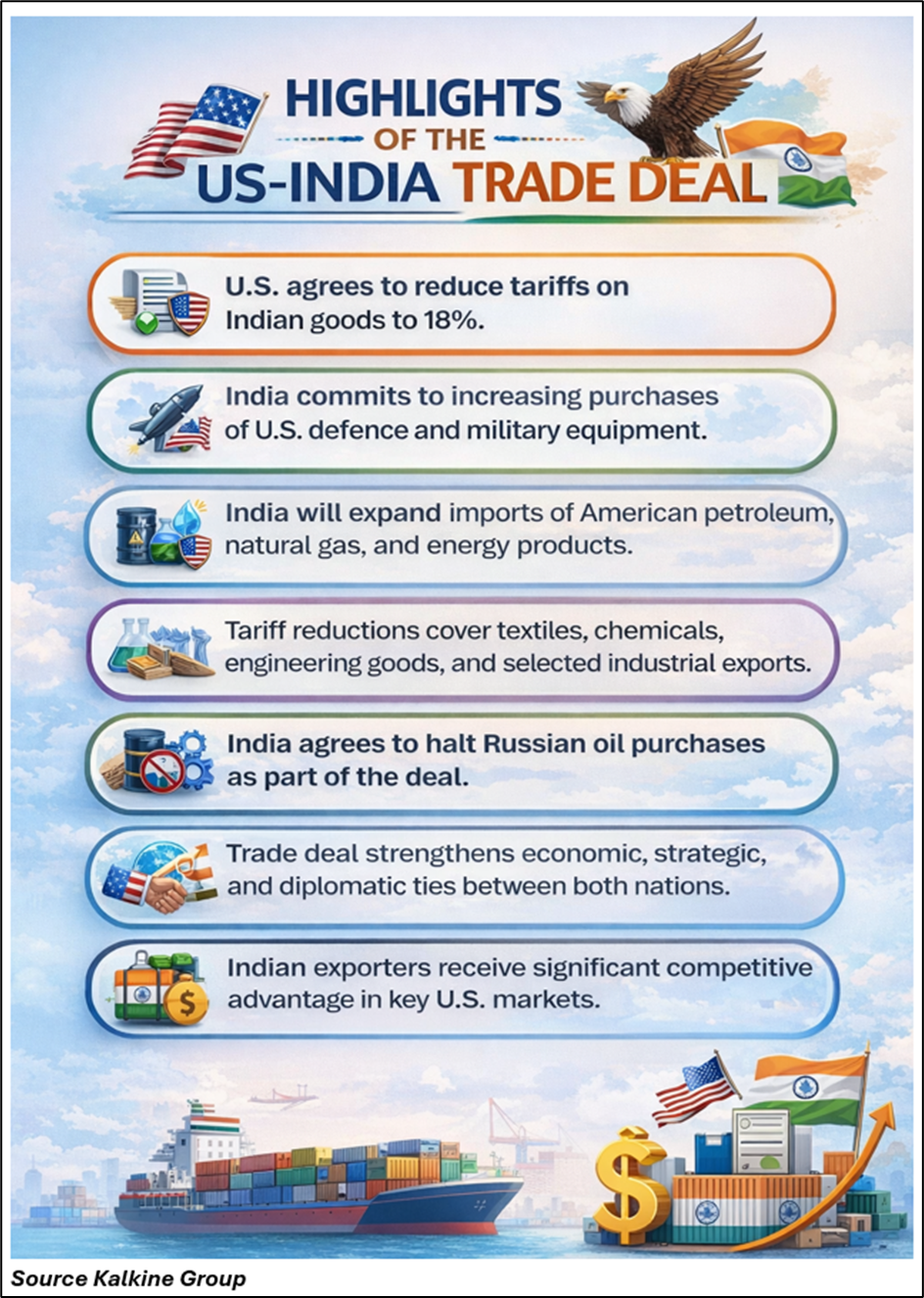
Under the announced framework, the United States has agreed to reduce tariffs on a broad range of Indian exports to around 18%, down from earlier punitive levels. In return, India has committed to increasing purchases of U.S. goods, including petroleum, defense equipment, aircraft, and selected agricultural products. While leaders have confirmed the agreement in principle, detailed product-wise terms have not yet been released publicly.
Energy and Strategic Commitments Take Center Stage
One of the most notable aspects of the deal is India’s commitment to significantly expand imports of U.S. energy products, particularly crude oil and liquefied natural gas. This move aligns with Washington’s long-standing demand for greater market access and diversification away from Russian energy supplies. U.S. officials have described this as a “strategic and commercial win,” while Indian officials have emphasized that decisions will remain guided by national interest.
Market Reaction Signals Investor Confidence
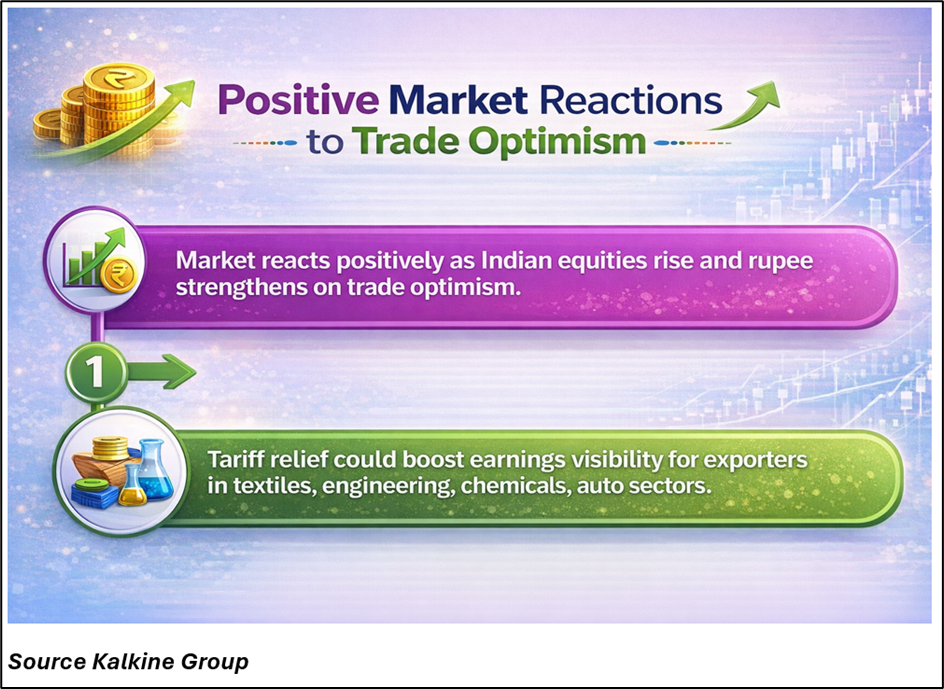
Financial markets reacted positively to the trade announcement. Indian equity indices rose, and the rupee strengthened against the U.S. dollar as investors welcomed reduced trade friction with India’s largest export destination. Analysts noted that tariff relief could improve earnings visibility for Indian exporters in sectors such as textiles, engineering goods, chemicals, and auto components.
Indian officials have framed the agreement as a pragmatic step to protect exporters and stabilize trade relations, while U.S. officials have emphasized fairness and reciprocal access. Business groups in both countries have welcomed the announcement but cautioned that clarity on implementation timelines and sector-specific rules will be critical for realizing the deal’s full benefits.
Final Takeaway: Deal Announced, Details Pending
In summary, the US–India trade deal has been officially announced at the leadership and government-briefing level, even though a detailed, signed treaty text has not yet been made public. Markets and businesses have reacted positively, but the next phase will depend on formal documentation and regulatory follow-through.
Disclaimer:
The information available on this article is provided for education and informational purposes only. It does not constitute or provide financial, investment or trading advice and should not be construed as an endorsement of any specific stock or financial strategy in any form or manner. We do not make any representations or warranties regarding the quality, reliability, or accuracy of the information provided. This website may contain links to third-party content. We are not responsible for the content or accuracy of these external sources and do not endorse or verify the information provided by third parties. We are not liable for any decisions made or actions taken based on the information provided on this website.
Copyright 2026 Krish Capital Pty. Ltd. All rights reserved. No part of this website, or its content, may be reproduced in any form without our prior consent.