What’s Behind the India–Canada Energy Revival in 2026?

Source: Shutterstock
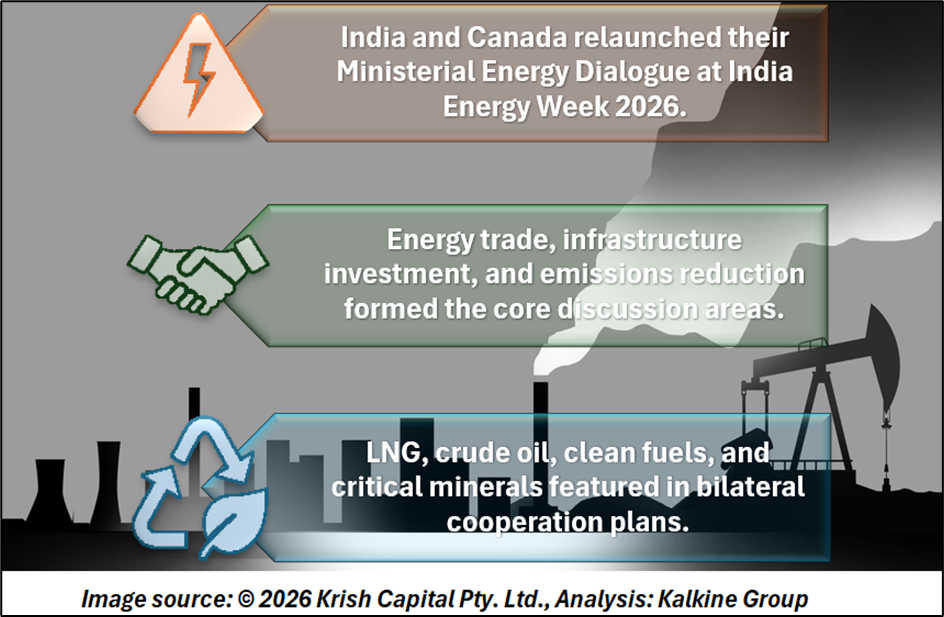
India and Canada formally renewed bilateral energy engagement with the signing of a Joint Statement at India Energy Week 2026 (IEW’26) in Goa. The dialogue brought together India’s Minister of Petroleum and Natural Gas, Shri Hardeep Singh Puri, and Canada’s Minister of Energy and Natural Resources, Mr. Timothy Hodgson.
The meeting marked the first participation of a Canadian Cabinet Minister at the event and led to the relaunch of the India–Canada Ministerial Energy Dialogue, positioning energy security as a shared policy focus.
Complementary Energy Profiles Drive Alignment
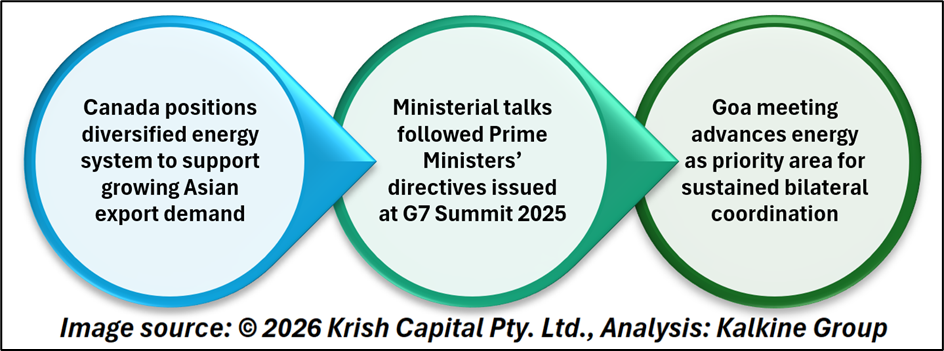
Both sides highlighted the complementary nature of their energy systems. Canada outlined its position as a diversified energy producer with interests spanning conventional fuels and clean energy, alongside a strategy to expand exports toward Asian markets.
India was described as a central driver of global energy demand growth, accounting for over one-third of incremental global demand over the next two decades. Infrastructure developments such as Canada’s Trans Mountain Expansion Pipeline were noted in the context of crude oil, LNG, and LPG supply potential to India.
G7 Continuity Shapes Energy Cooperation
The ministerial interaction followed directions issued by the Prime Ministers of both countries at the G7 Summit in June 2025 in Kananaskis, Canada. Leaders had emphasized the resumption of senior-level and working-level engagements across priority sectors. The Goa meeting translated that mandate into sector-specific coordination, with energy identified as a key area for sustained government-to-government engagement.
Trade Across Fuels and Refining Chains
The Joint Statement recorded agreement to deepen bilateral energy trade. Areas discussed included Canadian supplies of LNG, LPG, and crude oil to India, as well as Indian exports of refined petroleum products to Canada. India’s policy initiatives to increase domestic oil production, expand refining capacity, and raise the share of natural gas in its energy mix were identified as relevant to long-term trade coordination across the energy value chain.
Investment Frameworks and Capital Flows
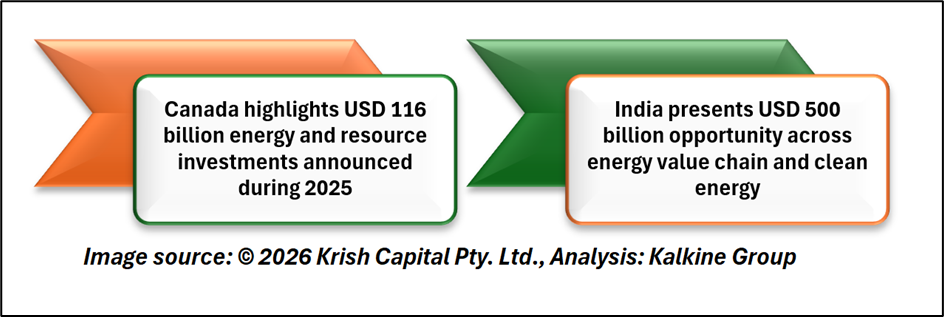
Investment cooperation formed a central element of the renewed dialogue. Canada referenced its Major Projects Office and more than USD 116 billion in energy and resource investments announced in 2025.
India outlined reforms and an estimated USD 500 billion investment opportunity across upstream, midstream, downstream, and clean energy segments. Both governments indicated intent to facilitate reciprocal and long-term investments aligned with regulatory frameworks in each country.
Climate Goals and Emerging Technologies
The Ministers emphasized coordination on emissions reduction in conventional energy systems, including carbon capture, utilization, and storage. Additional areas identified for collaboration included hydrogen, biofuels, sustainable aviation fuel, battery storage, critical minerals, clean technologies, resilient electricity systems, and the application of artificial intelligence in energy operations.
Structured Path for Ongoing Engagement
The Joint Statement reaffirmed commitments to structured ministerial dialogue, expert-level cooperation, and business-to-business and business-to-government engagement. Multilateral platforms, including initiatives such as the Global Biofuels Alliance, were referenced as channels to align energy security objectives with climate action and global economic stability.
Energy Meets Strategy: A Timely Reset
India and Canada are ramping up energy cooperation, driven by India’s surging demand and Canada’s diversified supply potential. The renewed ministerial dialogue focuses on LNG, crude, LPG trade, refining coordination, and reciprocal investments, while advancing clean energy, hydrogen, biofuels, and emissions reduction technologies. Anchored in G7 directives and structured bilateral engagement, the partnership aims to align energy security with climate goals, emerging technologies, and resilient infrastructure—positioning both nations as strategic collaborators in the evolving global energy landscape.
Disclaimer:
The information available on this article is provided for education and informational purposes only. It does not constitute or provide financial, investment or trading advice and should not be construed as an endorsement of any specific stock or financial strategy in any form or manner. We do not make any representations or warranties regarding the quality, reliability, or accuracy of the information provided. This website may contain links to third-party content. We are not responsible for the content or accuracy of these external sources and do not endorse or verify the information provided by third parties. We are not liable for any decisions made or actions taken based on the information provided on this website.
Copyright 2026 Krish Capital Pty. Ltd. All rights reserved. No part of this website, or its content, may be reproduced in any form without our prior consent.